
Adventure Medical Kits - Adventure Discussions
     ADVENTURE DISCUSSIONS

Essentials for Family Camping First Aid

July 15th, 2010

It’s summertime! That means it is time to get outside and explore your state and national parks, recreation areas, and favorite campgrounds.  Before you pack up the kids into the SUV,  be sure to review this list of outdoor first aid tips from wilderness safety expert Buck Tilton, who this month joins AMK as a regular blogger. Welcome aboard Buck!

Buck Tilton is AMK's Newest Expert Blogger

AMK's Newest Expert Blogger Buck Tilton

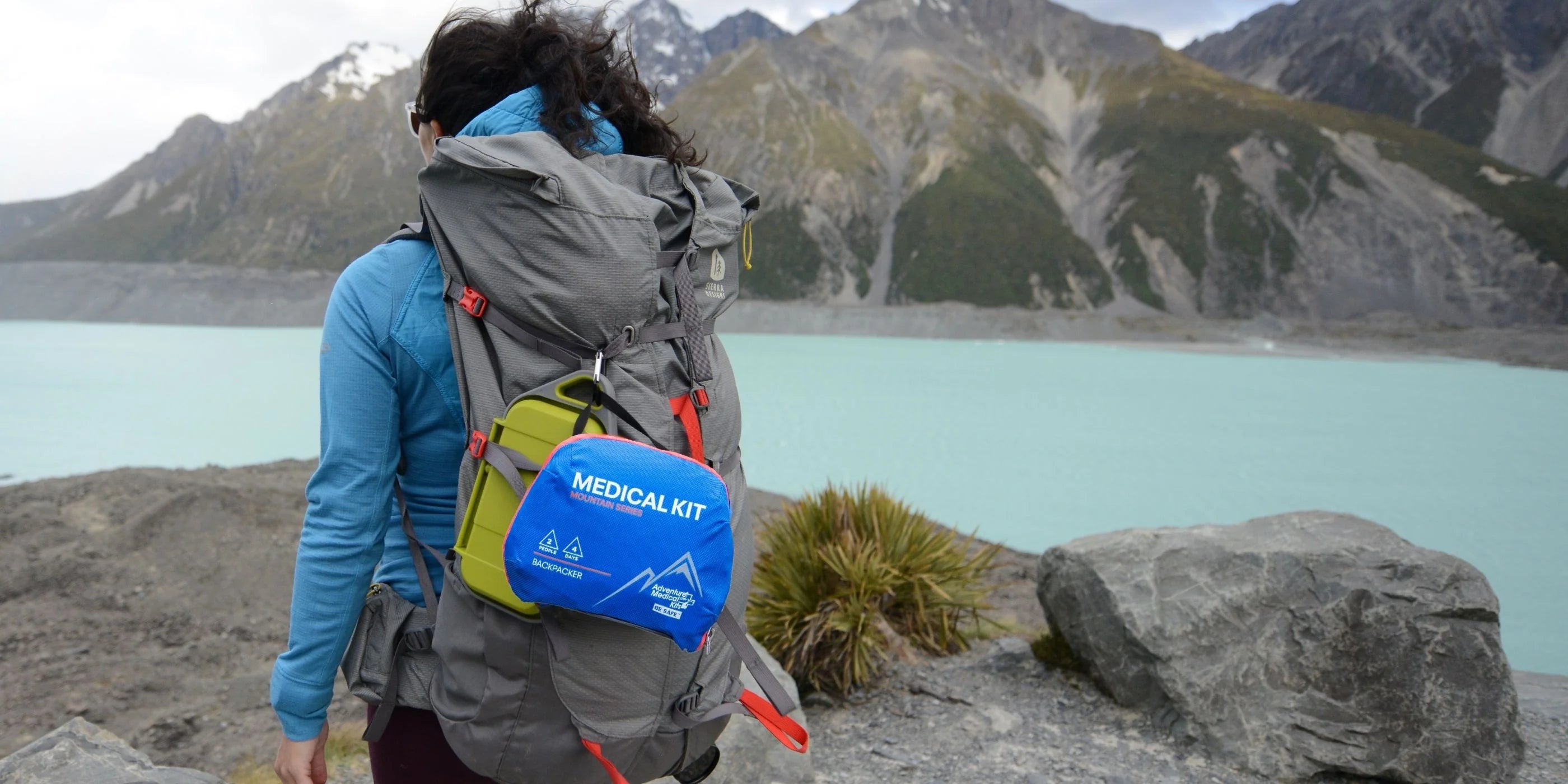
When you pack for a camping trip, a first-aid kit is a mandatory item. Heck, it has been on the list of Ten Essentials ever since the invention of lists. If your gear includes the Adventure Medical Kits’ Day Tripper with the Easy Care First Aid System, you can handle the most common problems—even without advanced first aid training.

Day Tripper features the Easy Care First Aid System

Day Tripper features the Easy Care First Aid System

Cuts and scrapes send you looking for the kit most often. Three goals are worthy of consideration:

1. Stop Serious Bleeding
Almost all bleeding can be stopped with direct pressure: pressure from your hand directly on the wound (preferably with gloves on). Adding a product such as QuikClot to your medical kit will put you in control of more nasty bleeds. You can allow small wounds to bleed to a stop, a process that may help clean them a bit.

QuikClot Sport stops serious bleeding in as little as five minutes

2. Prevent Infection

Cleaning Wounds
Proper wound cleaning and dressing will prevent infection in most wounds. Cleaning also speeds healing and reduces scarring. The best method for cleaning is mechanical irrigation delivered from a high-pressure, irrigation syringe with 18 gauge plastic tip. The best cleaning solution is disinfected water—water that’s safe to drink. Draw the solution into the syringe, hold it about two inches above the wound and perpendicular to the wound, and push down forcefully on the plunger. Use at least half a liter, more if the wound still looks unclean. Without an irrigation syringe, you can improvise by using a biking water bottle, forcing water from a hydration bladder, or punching a pinhole in a clean plastic bag full of water. Embedded pieces of gravel and dirt will need to be scrubbed clean from the skin to further reduce the chance of infection.

3. Promote Healing

Dressing Wounds
Wounds heal faster with less scarring if they are kept slightly moist with an antibiotic ointment. Then use a dressing to completely cover the wound and ideally extend a half-inch or so beyond the wound’s edge. The bandage will fix, protect, and further assist the dressing. It can be conforming gauze, tape, elastic wraps, clean cotton strips, or improvised out of anything available. For very small wounds, the dressing and the bandage are available as a unit, often called a Band-Aid, found in all first-aid kits.

Treating Sprains
First aid for a sprain, another common injury, is RICE: Rest, Ice, Compression, and Elevation. Do not use the injury (Rest) for about 30 minutes while you reduce its temperature (Ice) as much as possible without freezing. Without ice, soak the joint in cold water, or carry chemical cold packs, or wrap the joint in wet cotton and let evaporation cool the damaged area. Compression requires an elastic wrap. Wrap it toward the heart and snug but not tight enough to cut off healthy circulation. Elevation refers to keeping the injury a few inches higher than the heart of the injured person. Taking an anti-inflammatory medication  such as ibuprofen (200mg -  follow directions on package)  will help to reduce both pain and inflammation. After 20 to 30 minutes of RICE, remove the treatment and let the joint warm naturally for 10 to 15 minutes before use. If it hurts a lot, don’t use it—and find a doctor.

Treating & Preventing Stomach Ailments
Diarrhea is the most common illness disturbing a family camping trip. You can greatly reduce your chances of contracting diarrhea, if you always wash your hands before eating and make sure the cook crew prepares food with freshly cleaned hands. If soap and water aren’t available, keep alcohol-free Adventure® Hand Sanitizer nearby; it kills 99.9% of bacteria, but won’t dry out the skin like alcohol-based sanitizers do. There are many causes, but with all causes, dehydration is the immediate problem. Mild diarrhea can be treated with water or diluted fruit juices or sports drinks. Persistent diarrhea requires more aggressive replacement of electrolytes lost in the stool, and Oral Rehydration Salts provide the best treatment. Rice, grains, bananas, potatoes are okay to eat. Fats, dairy products, caffeine, and alcohol should be avoided. Anti-diarrheal drugs should be considered. If the diarrhea is not under control in about 24 hours, head for your physician.

Wash your hands before cooking and eating

Wash your hands before cooking and eating

Preventing & Treating Insect Bites & Stings
The little biters–mosquitoes, black flies, gnats, even ticks—tend to be the most bother but are the least serious camping problem. Pack to prevent the bites with a DEET-based product such as Ben’s® or go DEET free with Natrapel® 8 hour, containing a 20% Picaridin formula. After a bite, there’s, well, AfterBite, America’s favorite.

Buck Tilton is a wilderness medicine and survival expert and author, who has written 36 books on outdoor safety. Over the past 20 years, he has contributed hundreds of articles and a regular column to Backpacker. Tilton also co-founded the Wilderness Medicine Institute, now WMI of NOLS, which is the largest school of wilderness medicine in the world. This month he joins AMK as a regular blogger.

Tips for Assembling a 72-hour Emergency Preparedness Kit

September 2nd, 2010

By Christopher Van Tilburg, MD

When I was a boy, I watched Mount St. Helens explode from the front yard of the family home. It was both thrilling and terrifying. The Toutle River overflowed Interstate 5, and school was canceled due to ash fallout. Hurricane Katrina, the Spring floods that devastated Northeastern states, and now Hurricane Earl — which at the time of this post was threatening to hammer much of the Eastern Seaboard — prove that natural disasters can hit close to home. So, everyone should prepare a 72-hour emergency kit for Mother Nature’s worst.

ESSENTIALS

Ideally you need two kits: a large plastic bin for home and a small portable kit for your car. A good disaster kit has 5 components: water, food, first aid kit, extra clothing and bedding, and survival gear.

WATER, HYDRATION & FOOD

You’ll need a gallon of water per person per day, and a method of purification, in case you refill from a tainted municipal source. The simplest, easiest water storage is gallon jugs of commercially bottled water. I keep a supply of chlorine dioxide purification tablets, which I find lighter and more compact than a filter or ultraviolet light pen. Non-perishable food should be no-cook, ready-to-eat canned or dry goods with a good source of protein and carbohydrates. Simple, heat-and-eat meals are great, but you’ll need to add a small camp stove and fuel to your kit.

FIRST AID

For first aid supplies, I like the Fundamentals for home because it has enough components for multiple people for many days, with room for extra medications and tools. A combo kit, like the S.O.L. 3, which comes with essential first aid, survival and repair tools, is ideal for the car, when time and space are in short supply.

Select a kit with enough supplies to cover all the members in your household for a minimum of three days

CLOTHING, BEDDING & SHELTER

Have a spare sleeping bag, or a lightweight bivvy, which is always a mainstay in my SAR pack, car kit, and household bin. Toss in an old raincoat, fleece sweater, a hat, and gloves for everyone in your household.

SURVIVAL

Survival supplies are of paramount importance. Start with a personal survival kit that includes a whistle, fire starter, signal mirror, cord, wire, compass and other essentials. Include a headlamp with extra batteries, a pocket tool like a Leatherman Juice, hand sanitizer and body wipes for personal hygiene, insect repellent, sunscreen of SPF 25, and a battery operated AM/FM radio.

OTHER CONSIDERATIONSPERSONAL NECESSITIES

Don’t forget personal items like spare prescription glasses; extra prescription medicine; baby formula and diapers, if required; hygiene sundries; family documents, like photo ID and passports stowed in a waterproof travel case; and access to cash and credit cards. Make a list of emergency contacts and emergency utility shutoff valves in your house.

LAST BUT NOT LEAST…

Toss in instructions! Even the most skilled benefit from reminders, such as Dr. Weiss’ excellent Comprehensive Guide to Wilderness & Travel Medicine 3rd Edition, which includes life-saving tips on how to improvise treatments when you don’t have ready access to professional medical care — a common occurrence following a major disaster.

Storing the whole shebang is pretty simple. For your home kit, get a large waterproof plastic bin like a Rubbermaid Action Packer. Make sure everyone in your household knows the location. Rotate the food and water out every 6 to 12 months as expiration dates recommend. Add an empty backpack to the bin so you can grab gear in a jiffy. For your car, stash the gear in a soft kit in the trunk or under a seat. In your car, you should always carry repair tools too, including: a jack, spare tire, jumper cables, extra oil, a flat repair kit, basic tools, a tow strap, duct tape, and a small folding saw.

Check expiration dates on your kit's food and water supplies every six to 12 months

Let’s hope the natural world will calm down for a while. But when the seas heave, the winds blow, and the earth rattles, access to a complete disaster kit will make life easier and safer.

Chris Van Tilburg, M.D., is the editor of WMS’s Wilderness Medicine and the author of eight books on the outdoors. His most recent book is Mountain Rescue Doctor. Van Tilburg is also a member of Hood River Crag Rats Search & Rescue Team. He lives in Bend, Oregon.

End of Summer Camping Safety Tips

September 1st, 2010

Labor Day Weekend, just before the kids go back to school, is typically the last gasp of camping in many parts of the country. But the unofficial end of summer doesn’t mean the potential hazards that exist in the outdoors at the start of the season are any less of a threat. In the second of his two-part piece on camping safety, AMK’s wilderness safety blogger, Buck Tilton, tackles bears and the basics – starting with how to choose the right campsite.

Timing is Everything

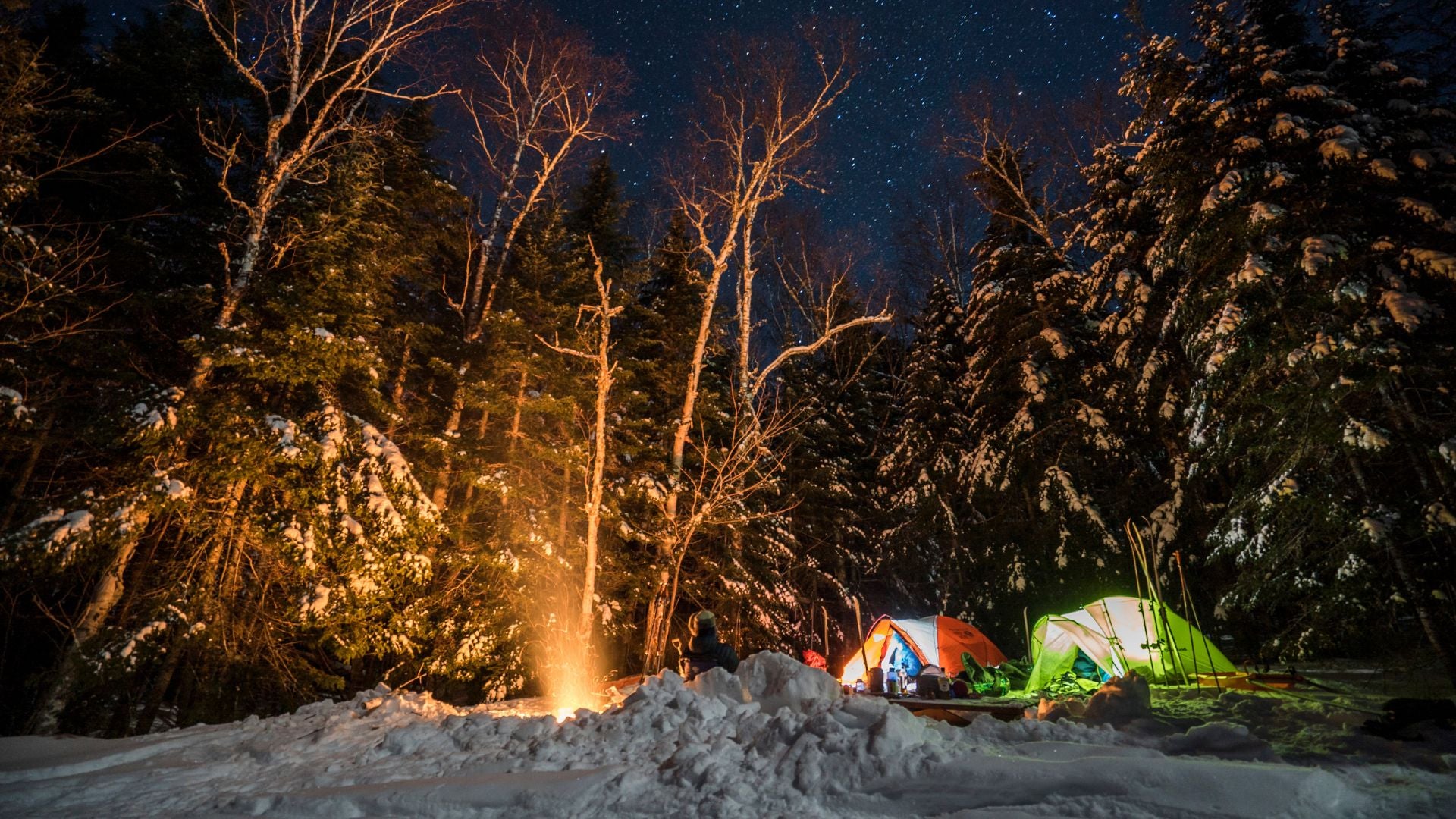
If the sun is fading fast, you have already broken the first rule of safe campsite selection: do your selecting and setting up while you have plenty of light. Whether you are in the backcountry or a national park campground, if you can’t see well, you can’t do well. Yes, you’re looking for comfort, but even more you want a site free of hazards.

Look Up, Look Down, Look All Around!

Look up for “widowmakers,” large dead limbs that could fall. No tents or kitchen sites go under widowmakers, or underneath dead trees that could topple in a high wind. Look down for signs rain has puddled or run through your choice of campsites. Even if you don’t anticipate precip, choose another site with more elevation, just to be sure. If it’s thunderstorm season, do not set camp in the open, on ridges, or near tall trees where your site could be a target for lightning. Avoid being too close to the tops of cliffs that someone might stumble off or the bottom of cliffs that rocks could tumble off.

Location, Location, Location

You want to be near a source of water but not too near. The Leave No Trace program asks you to be at least 200 feet (about 70 adult paces) from water to reduce the chance of impact. With children along, you also want to avoid banks with sudden drop-offs into deep water and/or fast currents. Keep your campfire area clean of all objects – wood, kindling, rocks and anything else that may trip you up for a fall into the fire. Stack wood and kindling far back from the fire ring or pit.

The Bear Facts

If you see bear signs—bear scat, bear tracks, claw marks on trees, juicy berries, salmon leaping upstream, gnawed deer carcasses, or big furry bruins—you are not at a safe campsite. If you are in the backcountry and you find your designated campsite littered with tent stakes, cooking utensils and rope be aware the previous occupants could have left in a hurry do to a nearby bear or other wild animal raiding the camp.  Find a different spot. If you can see a long way from your site, good. Bears will see you a long way off and you can see them a long way off. Bears do not like surprises. Generally speaking, bears do not like noise either. This is the one time when a heavy snorer is a welcome addition to your tent! In bear country, don’t shush the kids too often.

Your trash is bear treasure. Practice clean camping. Consider all garbage attractive and keep it separately bagged within your food bag. Cache all food and anything else fragrant, such as toothpaste, soap, and chewing gum. You have three cache choices in the backcountry:

  1. You can hang your food and other fragrant items in a tree.
  2. You can store it in a bear-proof container.
  3. When trees are scarce, you can double bag your items in plastic and store it on the ground at least 300 feet from your tent.

When car camping, store everything in the car – camp stove, water bottles, cooking utensils, food and coolers. And lastly, check yourself and your kids to make sure no one is wearing food from dinner on their clothes or is carrying a spare candy bar in their pocket.

Bear-Proofing Your Food

Trees for hanging food should be located at least 300 feet from camp

I recommend packing about 60 feet of strong cord or light rope for hanging a bear bag. The trees you choose for hanging the bag should be at least 300 feet (91.44 meters) from your camp. Although you can toss the line over a high limb and haul it up, food is safer depending from a line stretched between two trees with the bag ending up at least 10 feet off the ground and at least four feet from the nearest tree trunk.

With Small Kids

With the site selected, the kids need a safety briefing. Establish the boundaries across which they are not allowed. Point out any obvious dangers: poison ivy, attractive berries that should be avoided, plants that can puncture. Then see if you can get them to help set up camp!

Recommended Safety Gear List for Your Camping Trip:

First Aid Kit – Adventure® Medical Kits’ Day Tripper.
Bug RepellentBen’s® Deet-based repellent or Natrapel® 8 hour Deet-Free.
Bite TreatmentAfterBite® – America’s #1 brand for effective bite relief.
Survival Blanket – The Heatsheets® Survival Blanket . Can be used as an emergency shelter or as a ground cloth for your tent.
Hand Sanitizer – Alcohol-free Adventure® Hand Sanitizer. Using it will reduce the chance of contracting a stomach ailment in the backcountry.
Body Wipes – Rinse-free Fresh BathBody Wipes. Specially formulated to kill odor causing bacteria while also helping to moisturize the skin. Next best thing to a shower!

For more great camping safety gear go to: www.adventuremedicalkits.com

Buck Tilton is a wilderness medicine and survival expert and author, who has written 36 books on outdoor safety. Over the past 20 years, he has contributed hundreds of articles and a regular column to Backpacker. Tilton also co-founded the Wilderness Medicine Institute, now WMI of NOLS, which is the largest school of wilderness medicine in the world. This month he joins AMK as a regular blogger.


Rebecca Rusch Wins Leadville 100 — Again!

August 16th, 2010

For the second year in a row, Rebecca Rusch took top spot among women in the Leadville 100 mountain bike race, one of the most grueling and high-profile races on the mountain bike tour, which was held in and around Leadville, CO, this past weekend.

Rebecca’s winning time of 7:47:35 set a new course record, destroying the previous record, held by Laurie Brandt, by more than 11 minutes. The next closest racer behind Rusch was Amanda Carey, who came in at 8:12:54.

“Another win at Leadville is a huge. This race is just unreal,” said Rusch quoted in a post on Bike World News. “I’ve been training with this being my main goal all year. Still, I surprised myself.  I wanted the course record, but I didn’t expect to beat it by 11 minutes. This was the most painful day I had on a bike, but it was worth it.”

Congratulations Rebecca!

Outdoor Retailer Summer Market 2010 Round-up

August 12th, 2010

Many of us at Adventure® Medical Kits just got back from another busy but great Outdoor Retailer Summer Market — the trade show for leading outdoor manufacturers and retailers, which takes place the first week of August in Salt Lake City, UT.  Prior to and during the show, AMK was recognized by OR’s organizers as one of its ’40+ Legacy Partners’. The initiative, which included special call-outs on OR’s website and signage on the convention floor, honored AMK as one of only 54 companies that has exhibited at Outdoor Retailer for at least 40 shows. Below is a summary of other highlights that occurred during OR:

SOL ORIGIN & CORE LITE MANIA!

Buyers and media alike couldn’t get enough of the company’s first ever line of Essential Tools, the SOL Origin and Core Lite. The Origin was prominently featured on the local Salt Lake ABC affiliate and Park City Television, among a plethora of other media outlets. Representing AMK’s first entry into hard goods, the Origin and Core Lite — which will also be the first products to be released under the newly minted SOL brand — offer a multitude of survival components that will save your bacon, if you’re lost, hurt or stranded in the outdoors. Among other items, both the Origin and the Core Lite come with a fully featured knife — a folding AUS-8 locking blade with easy-grip handle that includes a built-in LED light and single-frequency, pea-less whistle. Both products will hit store shelves later this year — just in time for the holiday rush!

AMK ATHLETES IN THE BOOTH

Plenty of AMK’s athletes and other industry notables stopped by the booth, including International Mountain Guides‘ partners Eric Simonson and George Dunn. George recently became the first person to ever summit Mt. Rainier 500 times. An amazing milestone. Congratulations George! Only 500 more till you reach 1000, right?  Women’s World Mountain Bike Champ Rebecca Rusch also hung out in the booth. Rebecca was preparing to compete in the Leadville 100, which is coming up this weekend. Rebecca won the event in ’09 and is gunning for the two-pete this year. Best of luck, Rebecca!

Rebecca Rusch hanging out in the AMK booth

Throughout the show, AMK was also helping to raise money for Epicocity’s Elephant Ivory Project, which aims to end the practice of elephant poaching in Africa. National Geographic Channel’s Young Explorer grant winner Trip Jennings and the Epicocity Crew are currently raising funds for a forensic biology expedition to the remote jungle of the Democratic Republic of Congo this fall, with the goal of saving wild elephants from the illegal ivory trade. You can help the cause directly, by donating money to the project here.

During the OR show, AMK also donated DEET-free Natrapel® 8 hour insect repellent and Ultralight/Watertight medical kits to the Four Corners School of Outdoor Education (FCS), a Monticello, Utah-based non-profit organization that provides outdoor education on and about the Colorado Plateau located in parts of Arizona, Colorado, New Mexico, and Utah. According to executive director and founder Janet Ross, the Natrapel® 8 hour was sure to be an indispensable item for the trip the FCS was organizing for a group of outdoor industry leaders to the Canyonlands and Arches National Park, following the conclusion of OR. To learn more about the great work the FCS does, go here.

It’s hard to believe it already came and went, but it was another amazing Summer OR show for Adventure® Medical Kits. Now the real work begins, getting the new products onto retailers’ shelves – oh yeah, and preparing for Winter OR 2011. It’s, like, only six months away!

AMK Donates Gear to Boy Scouts’ 100th Anniversary Jamboree

July 30th, 2010

Look for AMK gear at the BSA's National Jamboree

Adventure® Medical Kits is proud to announce that it has donated gear to the Boy Scouts of America’s 100th Anniversary National Jamboree, which is taking place this week at Fort A.P. Hill, Virginia.

Working in concert with Scout Troops 364 and 361, of Madison, AL, AMK is supporting the Jamboree with the donation thousands of samples of DEET-free Natrapel® 8 hour insect repellent wipes, which will distributed along with “Be Safe” outdoor first aid pamphlets in goodie bags to scout leaders. In addition, AMK is also providing a variety of its medical kits, survival packs and hygiene products, including the alcohol-free Adventure® Hand Sanitizer and Fresh Bath Travel Wipes.

Throughout the Jamboree, Troops 364 and 361 will use the AMK products to teach four outdoor merit badges — for camping, hiking, backpacking and cooking – to scouts in attendance. All of the AMK gear will also be showcased in designated areas as “suggested products” that scouts should pack when camping, backpacking or hiking.

Separately, AMK is also shipping a significant amount of Natrapel® 8 hour wipes to the Scouts’ New York City Jamboree, which will take over part of Times Square from July 30 – August 1st. NYC-based outdoor retailer Tents & Trails will hand out the wipes on behalf of AMK along with prizes for troops, including AMK’s Day Tripper medical kit and stainless steel SOL Survival Bottle.

Natrapel 8 hour wipes to be distributed to Scouts at Times Square Jamboree

Whatever Jamboree you’re attending this week, be sure to make it a safe one!

Best — Adventure® Medical Kits.

DIY Gear: Using an Emergency Shelter to Create a Vest

July 27th, 2010

Here’s an interesting question that came in over our blog today:

Q: I’d like to make a vest out of the SOL Thermal Bivvy-  should the seams be sewn or will an iron work to weld seams?

A: My advice is to sew the seams, rather than trying to weld them.  If using an iron to weld seams, I would be worried about excessive heat weakening the fabric or causing the two layers of the fabric to separate.

***

Does anyone else have any good stories about using our products (or anyone else’s products, for that matter) to make their own clothing or gear?  If you ask me, some of the best ideas in the outdoor gear have their roots in DIY-specialists or the cottage industry, so we’re always interested to hear how people like to use our products.  I’ve received emails from people that have used Heatsheets blankets as solar heat reflectors inside their cars or as insulation inside coolers, so I know there are enthusiastic innovators out there taking our products beyond what we imagined when we made them.  If you have a story, please share it with us in our comments section.

-Jordan Hurder, Product Specialist

AMK’s Kyle Peter Completes Western States 100

July 9th, 2010

Congratulations to AMK East Coast Sales Manager Kyle Peter, who recently competed in his first 100 mile race — the Western States 100. Known for its grueling terrain, the Western States 100 takes place in late June, in California, starting at the base of the Squaw Valley ski resort and finishing up at the Placer High School track in Auburn.

Kyle recuperating post race

Over the course of the race runners climb 18,000 feet and descend a total of 23,000 feet on mountain trails before they cross the finish line. Runners finishing before the 30 hour time limit for the race receive a bronze belt buckle; those who finish in under 24 hours receive a silver belt buckle. Kyle, an accomplished adventure racer and member of Team Tecnu, snagged a bronze buckle, finishing in 169th place at a time of 26:35. Read below his account of the challenges he experienced during his first stab at an ultra marathon:

This was by far the highest quality event I have ever competed in, and that includes Ironman and Primal Quest. After the race, I definitely developed a new outlook on the pace of adventure racers – Adventure Racers, we are slow!

Read the rest of this entry »

AMK’s Tips for Stopping Bleeding

July 8th, 2010

In this “Medical Minute” segment AMK’s wilderness medical consultant and AMK Co-founder, Eric A. Weiss, MD, debunks some commonly held myths about the most effective methods for stopping problem bleeding. While there are some great new hemostatic products ( Quikclot ) on the market to stop a severe bleed – like an arterial bleed,  - the tried and true method of applying direct pressure will work 99% of the time. Watch this video to see how.

One of the co-founders of Adventure Medical Kits, Dr. Weiss is also the author of A Comprehensive Guide to Wilderness & Travel Medicine. Currently, he is the Associate Director of Trauma at the Stanford University Medical Center.

Seasickness — How to Avoid it & Treat it

July 6th, 2010

michael jacobs md

Plan on sailing this summer? Before you do, check out this post from Adventure®  Medical Kits’ marine medicine consultant Dr. Michael Jacobs for tips on dealing with that common ailment that afflicts many boating enthusiasts — seasickness.

Seasickness (mal de mer) is the sailor’s most common and dreaded ailment; susceptibility is virtually universal. Untreated, seasickness leads to rapid physical and mental deterioration, posing a major hazard to crew health, safety, and morale. Every year, seaworthy yachts are abandoned because their exhausted, seasick, and despondent crews have lost their collective will to persevere. Unfortunately, mariners frequently consider seasickness a medical emergency, and summon unnecessary and potentially hazardous medical evacuations; at the very least, seasickness can ruin a good day on the water for any boater. It is clearly an illness to be reckoned with.

CAUSE

Seasickness results from a mismatch of sensory input processed in the brain’s balance center, which orients the body’s position in space. Place someone in the cabin of a heeling and rolling boat, and you immediately invite “mal de mer.” Below decks, the eyes oriented to the floor and ceiling detect no tilt from vertical, but fluid in the inner ear (the vestibular apparatus) constantly shifts with the boat’s motion, sending a different position signal to the brain. Positions sensors in the neck, muscles, and joints relay additional information to the brain depending on how the person moves to maintain balance.  The conflict of sensory data from all these sources ultimately activates a series of responses, which we recognize as seasickness. Sensory conflict and the loss of spatial orientation can impair ones ability to think and reason clearly. Seasick sailors often lose short-term memory and the ability to solve problems and make sound judgments.  Confusion is also a side effect of many medications used to treat seasickness. Astronauts who suffer from motion sickness in space call this condition the “space stupids.” The equivalent condition for seasick boaters might be called “sea stupids.” The trick to preventing seasickness is to avoid sensory conflict by coordinating input, especially from your eyes and ears. Simply put, if your eyes are seeing what your ears are feeling, you will have a great day at sea!

PREVENTION

  1. Start your trip well hydrated, and avoid alcohol.
  2. Eat a light meal low in fat and high in starch.
  3. Pre-trip preparation should be designed to minimize time spent below decks while underway. Prepare a few simple meals ahead of time, and have personal belongings easily accessible.
  4. Avoid close-focused visual tasks such as reading.
  5. Stay in the fresh air, away from engine fumes, and near the center of the boat where motion is less pronounced.
  6. Munch on saltines, granola, or energy bars, and sip fluids.
  7. Look at the horizon to provide a stable reference point; sit or stand upright with your head and upper body balanced over your hips, and anticipate the boat’s motion as though “riding” the waves. Standing and taking the helm will help you accomplish this.
  8. Steer the boat by reference to the horizon, clouds, oncoming waves and distant marks; this is extremely effective in reducing seasickness. It may take as long as three days to adapt to the boat’s motion and get your “sea legs.”

MEDICATIONS

Medication is generally more effective in preventing symptoms than reversing them during this period of adaptation; therefore, if you anticipate you may become seasick, begin medication the night before departure.

Comp Guide to Marine MediciineBonine® (Meclizine), and Phenergan® are effective as well as other medications (see page 114 in A Comprehensive Guide to Marine Medicine for more info on medications). Sudafed®, or Nodoz®, can counteract the drowsiness caused by the antihistamines. The popular drug Stugeron® (Cinnarizine), although not sold in the United States, is available over-the-counter in Europe, Bermuda, Mexico, and Canada. It can also be obtained from www.canadadrugsonline.com. The prescription Transderm-Scop® adhesive patch, applied behind the ear two hours before departure, may cause less fatigue, and the benefits will last for three days. Review the many potential (and serious) side effects before using scopolamine with your physician. Scopace® tablets allow sailors to regulate the amount of scopolamine, which helps reduce side effects.

ALTERNATIVE THERAPIES

Alternative therapies, which appear beneficial for some mariners, include ginger capsules, one gram every six hours, supplemented with other ginger products. BioBand® and Sea-Band® are elastic bands with a plastic stud that applies pressure to the Neiguan P6 acupuncture site in the forearm.       The variety of medications, devices, and other remedies may work for some people and not for others. Therapies are subject to the placebo effect, and there are no well-controlled trials confirming the effectiveness of many products or comparing different treatments. The protection conferred by drugs is a matter of degree; there is no magic bullet to prevent seasickness in everyone.  If one drug fails to work for you, try another; try different medications or modalities on land to see if there are any unacceptable side effects. If you discover a safe regimen that works for you, stick with it and believe in what you use.

SIGNS, SYMPTOMS & TREATMENTS

The earliest signs and symptoms of seasickness are yawning and drowsiness, progressing to dry mouth, headache, dizziness, and extreme listlessness. Some people initially experience an unsettled stomach, slight sweating, mild blushing, and a feeling of warmth. Untreated, the person becomes pale, cold, and clammy. Nausea later comes in waves with belching, salivation, and then uncontrollable vomiting. Recognize and begin treatment with prescription anti-nausea medication (e.g. Phenergan®) when early signs appear. Phenergan® taken as a pill, but preferably a suppository, will prevent vomiting and subsequent dehydration. During treatment, lie down and try to sleep. Take small amounts of fluid, crackers, and hard candy.

Sailors now have many options to manage seasickness. It is no longer necessary to follow Samuel Johnson’s 18th century advice: “To cure seasickness, find a good big oak tree and wrap your arms around it.”

Dr. Jacobs is the co-author of A Comprehensive Guide to Marine Medicine, and the author of numerous articles and chapters on medicine for mariners and safety at sea. He is the founder of MedSail, and consultant to Adventure® Medical Kits. He practices medicine on Martha’s Vineyard.