
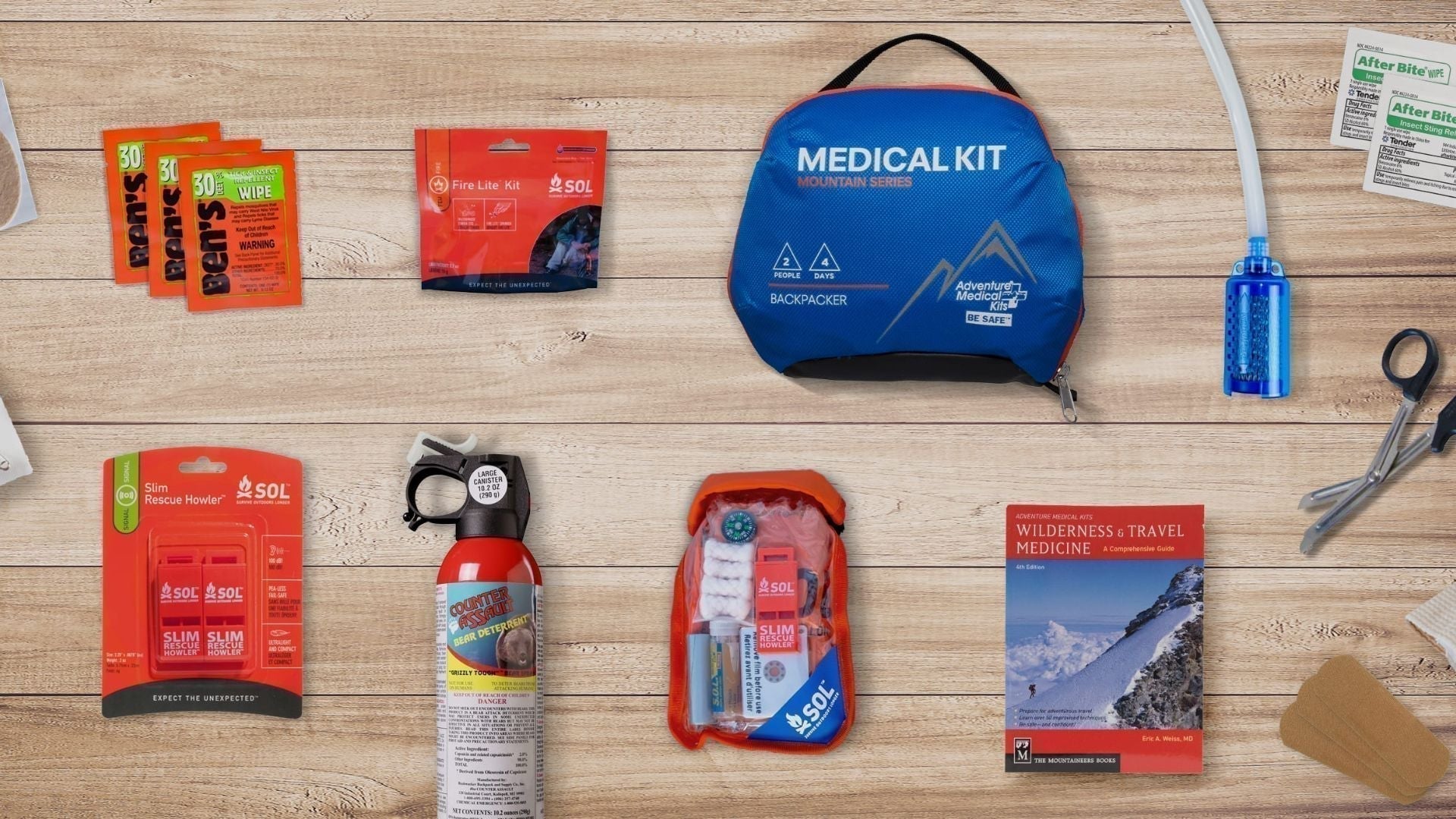
When I was a boy, I watched Mount St. Helens explode from the front yard of the family home. It was both thrilling and terrifying. The Toutle River overflowed Interstate 5, and school was canceled due to ash fallout. Hurricane Katrina, the Spring floods that devastated Northeastern states, and now Hurricane Earl — which at the time of this post was threatening to hammer much of the Eastern Seaboard — prove that natural disasters can hit close to home. So, everyone should prepare a 72-hour emergency kit for Mother Nature’s worst.
ESSENTIALS
Ideally you need two kits: a large plastic bin for home and a small portable kit for your car. A good disaster kit has 5 components: water, food, first aid kit, extra clothing and bedding, and survival gear.
WATER, HYDRATION & FOOD
You’ll need a gallon of water per person per day, and a method of purification, in case you refill from a tainted municipal source. The simplest, easiest water storage is gallon jugs of commercially bottled water. I keep a supply of chlorine dioxide purification tablets, which I find lighter and more compact than a filter or ultraviolet light pen. Non-perishable food should be no-cook, ready-to-eat canned or dry goods with a good source of protein and carbohydrates. Simple, heat-and-eat meals are great, but you’ll need to add a small camp stove and fuel to your kit.
FIRST AID
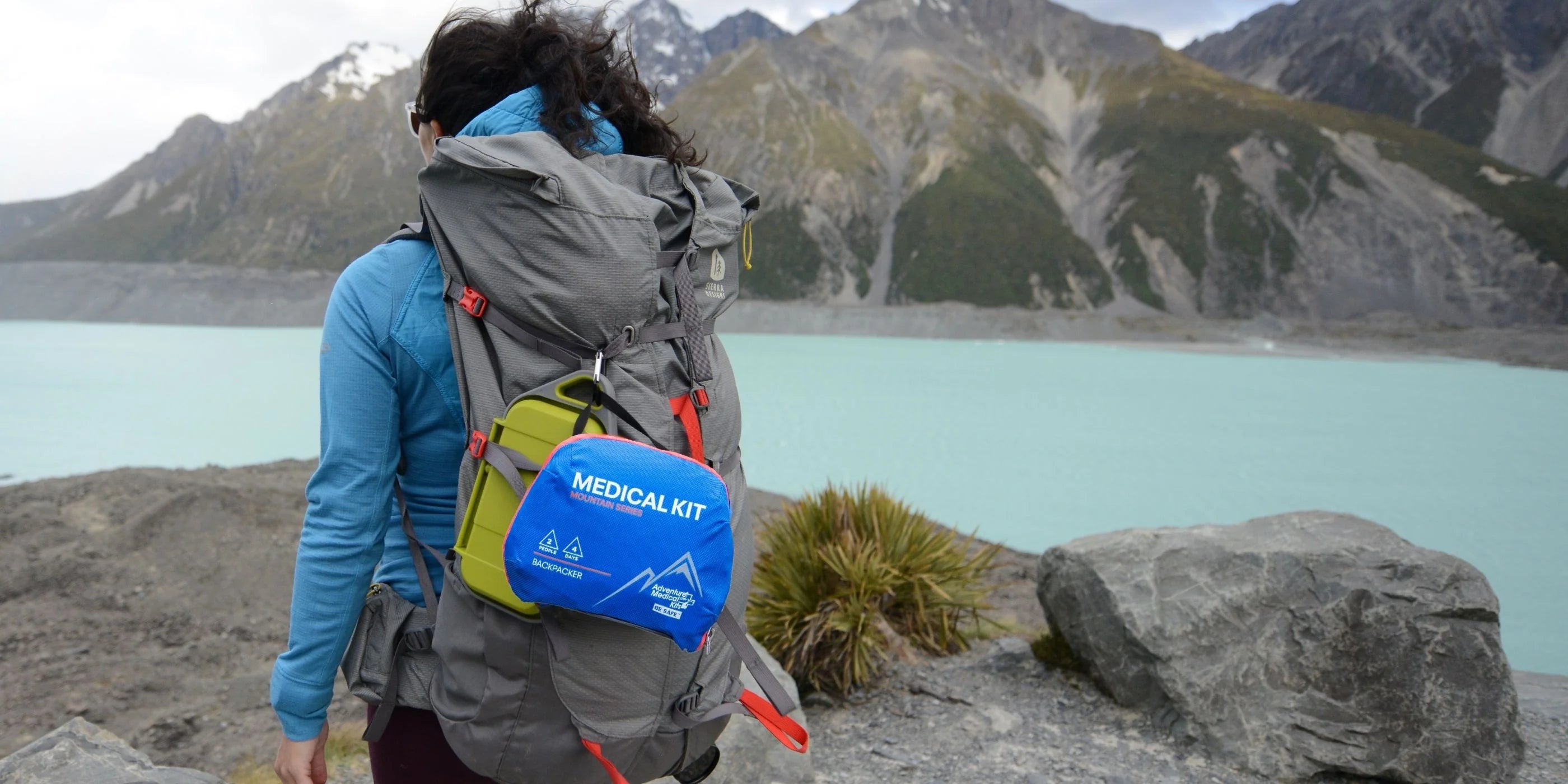
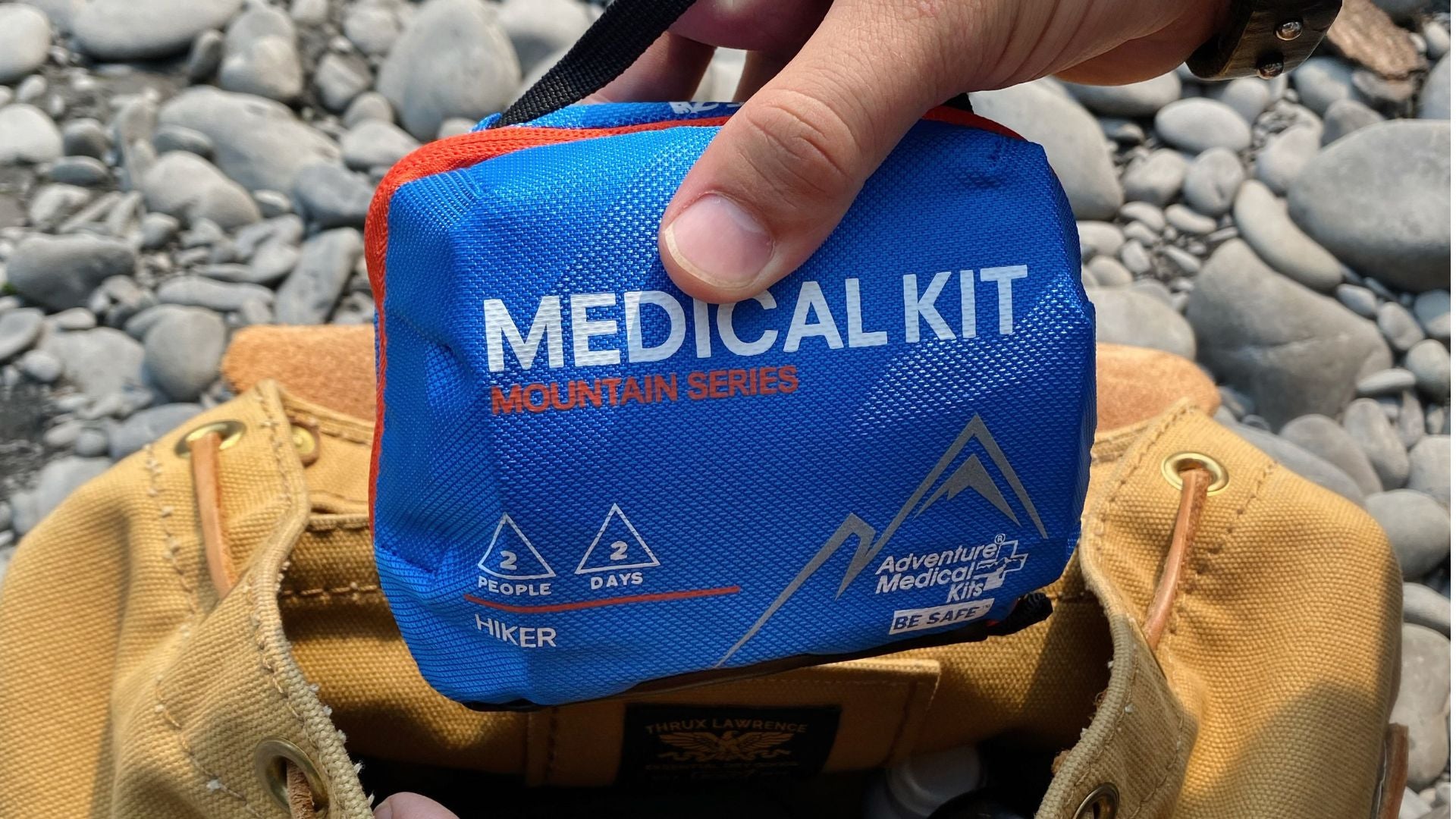
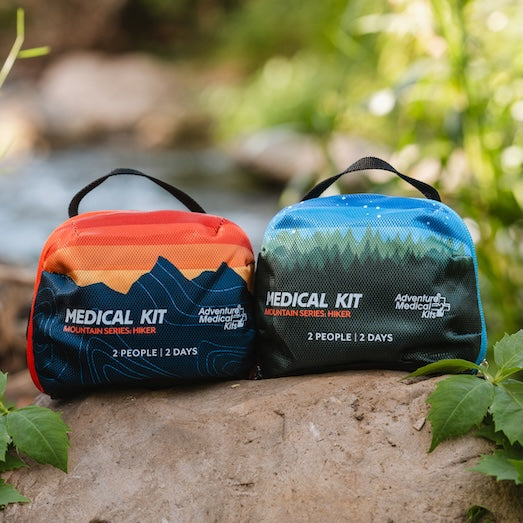
For first aid supplies, I like the Fundamentals for home because it has enough components for multiple people for many days, with room for extra medications and tools. A combo kit, like the S.O.L. 3, which comes with essential first aid, survival and repair tools, is ideal for the car, when time and space are in short supply.
Select a kit with enough supplies to cover all the members in your household for a minimum of three days
CLOTHING, BEDDING & SHELTER
Have a spare sleeping bag, or a lightweight bivvy, which is always a mainstay in my SAR pack, car kit, and household bin. Toss in an old raincoat, fleece sweater, a hat, and gloves for everyone in your household.
SURVIVAL
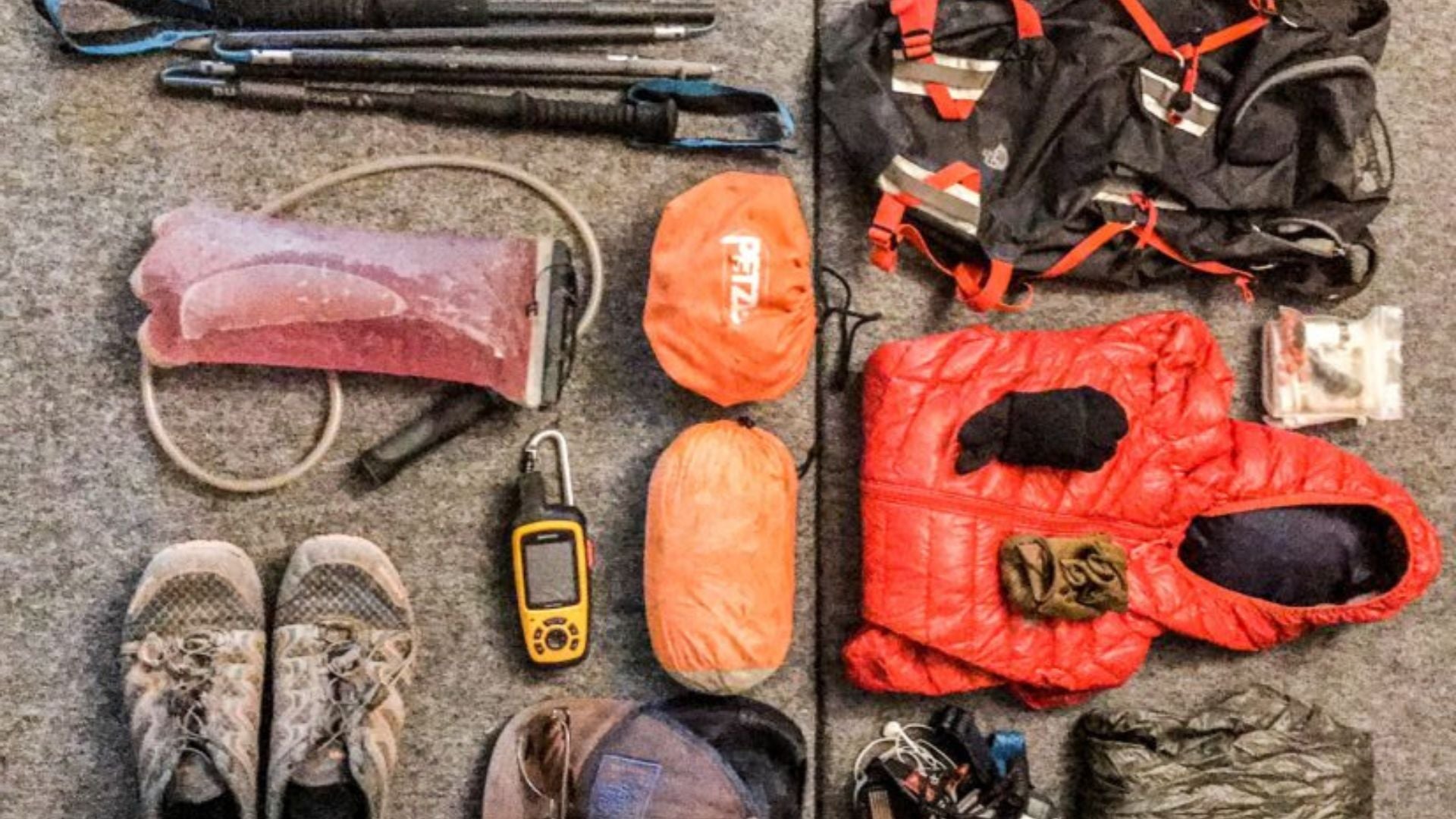
Survival supplies are of paramount importance. Start with a personal survival kit that includes a whistle, fire starter, signal mirror, cord, wire, compass and other essentials. Include a headlamp with extra batteries, a pocket tool like a Leatherman Juice, hand sanitizer and body wipes for personal hygiene, insect repellent, sunscreen of SPF 25, and a battery operated AM/FM radio.
OTHER CONSIDERATIONS — PERSONAL NECESSITIES
Don’t forget personal items like spare prescription glasses; extra prescription medicine; baby formula and diapers, if required; hygiene sundries; family documents, like photo ID and passports stowed in a waterproof travel case; and access to cash and credit cards. Make a list of emergency contacts and emergency utility shutoff valves in your house.
LAST BUT NOT LEAST…
Toss in instructions! Even the most skilled benefit from reminders, such as Dr. Weiss’ excellent Comprehensive Guide to Wilderness & Travel Medicine 3rd Edition, which includes life-saving tips on how to improvise treatments when you don’t have ready access to professional medical care — a common occurrence following a major disaster.
Storing the whole shebang is pretty simple. For your home kit, get a large waterproof plastic bin like a Rubbermaid Action Packer. Make sure everyone in your household knows the location. Rotate the food and water out every 6 to 12 months as expiration dates recommend. Add an empty backpack to the bin so you can grab gear in a jiffy. For your car, stash the gear in a soft kit in the trunk or under a seat. In your car, you should always carry repair tools too, including: a jack, spare tire, jumper cables, extra oil, a flat repair kit, basic tools, a tow strap, duct tape, and a small folding saw.
Check expiration dates on your kit's food and water supplies every six to 12 months
Let’s hope the natural world will calm down for a while. But when the seas heave, the winds blow, and the earth rattles, access to a complete disaster kit will make life easier and safer.
Chris Van Tilburg, M.D., is the editor of WMS’s Wilderness Medicine and the author of eight books on the outdoors. His most recent book is Mountain Rescue Doctor. Van Tilburg is also a member of Hood River Crag Rats Search & Rescue Team. He lives in Bend, Oregon.
Labor Day Weekend, just before the kids go back to school, is typically the last gasp of camping in many parts of the country. But the unofficial end of summer doesn’t mean the potential hazards that exist in the outdoors at the start of the season are any less of a threat. In the second of his two-part piece on camping safety, AMK’s wilderness safety blogger, Buck Tilton, tackles bears and the basics – starting with how to choose the right campsite.
Timing is Everything
If the sun is fading fast, you have already broken the first rule of safe campsite selection: do your selecting and setting up while you have plenty of light. Whether you are in the backcountry or a national park campground, if you can’t see well, you can’t do well. Yes, you’re looking for comfort, but even more you want a site free of hazards.
Look Up, Look Down, Look All Around!
Look up for “widowmakers,” large dead limbs that could fall. No tents or kitchen sites go under widowmakers, or underneath dead trees that could topple in a high wind. Look down for signs rain has puddled or run through your choice of campsites. Even if you don’t anticipate precip, choose another site with more elevation, just to be sure. If it’s thunderstorm season, do not set camp in the open, on ridges, or near tall trees where your site could be a target for lightning. Avoid being too close to the tops of cliffs that someone might stumble off or the bottom of cliffs that rocks could tumble off.
Location, Location, Location
You want to be near a source of water but not too near. The Leave No Trace program asks you to be at least 200 feet (about 70 adult paces) from water to reduce the chance of impact. With children along, you also want to avoid banks with sudden drop-offs into deep water and/or fast currents. Keep your campfire area clean of all objects – wood, kindling, rocks and anything else that may trip you up for a fall into the fire. Stack wood and kindling far back from the fire ring or pit.
The Bear Facts
If you see bear signs—bear scat, bear tracks, claw marks on trees, juicy berries, salmon leaping upstream, gnawed deer carcasses, or big furry bruins—you are not at a safe campsite. If you are in the backcountry and you find your designated campsite littered with tent stakes, cooking utensils and rope be aware the previous occupants could have left in a hurry do to a nearby bear or other wild animal raiding the camp. Find a different spot. If you can see a long way from your site, good. Bears will see you a long way off and you can see them a long way off. Bears do not like surprises. Generally speaking, bears do not like noise either. This is the one time when a heavy snorer is a welcome addition to your tent! In bear country, don’t shush the kids too often.
Your trash is bear treasure. Practice clean camping. Consider all garbage attractive and keep it separately bagged within your food bag. Cache all food and anything else fragrant, such as toothpaste, soap, and chewing gum. You have three cache choices in the backcountry:
You can hang your food and other fragrant items in a tree.
You can store it in a bear-proof container.
When trees are scarce, you can double bag your items in plastic and store it on the ground at least 300 feet from your tent.
When car camping, store everything in the car – camp stove, water bottles, cooking utensils, food and coolers. And lastly, check yourself and your kids to make sure no one is wearing food from dinner on their clothes or is carrying a spare candy bar in their pocket.
Bear-Proofing Your Food
Trees for hanging food should be located at least 300 feet from camp
I recommend packing about 60 feet of strong cord or light rope for hanging a bear bag. The trees you choose for hanging the bag should be at least 300 feet (91.44 meters) from your camp. Although you can toss the line over a high limb and haul it up, food is safer depending from a line stretched between two trees with the bag ending up at least 10 feet off the ground and at least four feet from the nearest tree trunk.
With Small Kids
With the site selected, the kids need a safety briefing. Establish the boundaries across which they are not allowed. Point out any obvious dangers: poison ivy, attractive berries that should be avoided, plants that can puncture. Then see if you can get them to help set up camp!
Recommended Safety Gear List for Your Camping Trip:
First Aid Kit – Adventure® Medical Kits’ Day Tripper. Bug Repellent – Ben’s® Deet-based repellent or Natrapel® 8 hour Deet-Free. Bite Treatment – AfterBite® – America’s #1 brand for effective bite relief. Survival Blanket – The Heatsheets® Survival Blanket . Can be used as an emergency shelter or as a ground cloth for your tent. Hand Sanitizer – Alcohol-free Adventure® Hand Sanitizer. Using it will reduce the chance of contracting a stomach ailment in the backcountry. Body Wipes – Rinse-free Fresh Bath™ Body Wipes. Specially formulated to kill odor causing bacteria while also helping to moisturize the skin. Next best thing to a shower!
Buck Tilton is a wilderness medicine and survival expert and author, who has written 36 books on outdoor safety. Over the past 20 years, he has contributed hundreds of articles and a regular column to Backpacker. Tilton also co-founded the Wilderness Medicine Institute, now WMI of NOLS, which is the largest school of wilderness medicine in the world. This month he joins AMK as a regular blogger.
Working in concert with Scout Troops 364 and 361, of Madison, AL, AMK is supporting the Jamboree with the donation thousands of samples of DEET-free Natrapel® 8 hour insect repellent wipes, which will distributed along with “Be Safe” outdoor first aid pamphlets in goodie bags to scout leaders. In addition, AMK is also providing a variety of its medical kits, survival packs and hygiene products, including the alcohol-free Adventure® Hand Sanitizer and Fresh Bath Travel Wipes.
Throughout the Jamboree, Troops 364 and 361 will use the AMK products to teach four outdoor merit badges — for camping, hiking, backpacking and cooking – to scouts in attendance. All of the AMK gear will also be showcased in designated areas as “suggested products” that scouts should pack when camping, backpacking or hiking.
Separately, AMK is also shipping a significant amount of Natrapel® 8 hour wipes to the Scouts’ New York City Jamboree, which will take over part of Times Square from July 30 – August 1st. NYC-based outdoor retailer Tents & Trails will hand out the wipes on behalf of AMK along with prizes for troops, including AMK’s Day Tripper medical kit and stainless steel SOL Survival Bottle.
Natrapel 8 hour wipes to be distributed to Scouts at Times Square Jamboree
Whatever Jamboree you’re attending this week, be sure to make it a safe one!
Look for DEET-free Natrapel 8 hourat this week’s Mid Atlantic Truck Camper Rally (April 15 -18) in Sanford, VA. Outdoor expert Brian Brawdy will be on site with his camper at the Tall Pines Harbor Campground handing out the gear-safe, as effective as DEET Natrapel 8 hour wipes to attendees and discussing outdoor safety.
Along with the Natrapel 8 hour wipes, Brian will be distributing Tick Reference Cards containing valuable advice on identifying and safely removing ticks, as well info on how to recognize symptoms of Lyme Disease.
Be sure to stop by and say hi to Brian. For more information on avoiding ticks, mosquitoes, Lyme disease and other bug-borne illnesses, check out Brian’s video below and download the Tick Reference Card!
Natrapel 8 hour contains 20% Picaridin, recommended by CDC to repel ticks
AMK will be providing educational support materials at community screenings of the award winning documentary Under Our Skin — a film which examines Lyme disease, a highly debilitating disease spread by ticks that has become one of the most controversial and fastest growing health problems of our time.
At select screenings this Spring, Adventure® Medical Kits and its parentco Tender Corp. will distribute copies of special Tick Reference Cards, which include tips for identifying and safely removing ticks as well recognizing symptoms of Lyme disease. AMK and Tender will also provide free samples of its DEET-free insect repellent Natrapel® 8 hour to attendees.
Natrapel 8 hour contains 20% picaridin, recommended by CDC to repel ticks
Spread by the Deer Tick, Lyme disease is an infectious disease that can cause long-term and ongoing illness with a range of symptoms that include chronic pain, fatigue and anxiety. According to the CDC’s statistics, close to 29,000 cases of Lyme disease were confirmed in 2008, with another 6000 cases suspected. However, as the film Under Our Skin documents, Lyme disease is often difficult to test accurately, which means tens of thousands of people go undiagnosed or are misdiagnosed each year.
Look for Natrapel® 8 hour educational Tick Cardsand Wipe samples at screenings of Under Our Skin at the following venues:
-University of New Hampshire – Manchester, NH – April 13
-Sherman Theatre – Stroudsburg, PA – April 24
-Peace in Medicine – Sebastopol, CA – April 27
-Winthrop Performing Arts Center – Winthrop, ME – April 30
-Scripps Ranch Library – San Diego, CA – May 4
Click here for full details on AMK and Tender Corp.’s support of the community screenings of Under Our Skin.
Adventure Medical Kits’ co-founder Frank Meyer spoke recently with outdoor radio show Backcountry Utah about the benefits of using powerful DEET-free insect repellent Natrapel 8 hour. Clickhere to listen to the interview.
Natrapel 8 hour contains CDC-recommended active ingredient Picaridin
Along with providing protection from insect bites and stings that is equal to or greater than that of DEET, Natrapel 8 hour’s formula — containing 20% of the active ingredient Picaridin — is also gear safe, meaning it won’t melt your fishing line, sunglasses, camera lens or other pricey plastic or synthetic materials like DEET can.
The Centers for Disease Control (CDC) recommends people use Picaridin-based repellents to help ward off ticks (which are responsible for the spread of Lyme Disease) and mosquitoes (which are responsible for the spread of West Nile Virus, Dengue Fever, Malaria and other serious illnesses).
Want Deet? Try Ben’s 30or Ben’s 100 - the ultimate in long lasting mosquito and tick protection!
No Deet? Try newNatrapel 8hour. CDC Recommended deet-free repellent that provides up to 8 hours of protection against mosquitoes, ticks and other biting insects. Download a $1.00 off coupon! Added bonus – Natrapel 8hour won’t harm your gear – safe for fishing line and other synthetic materials.
Ugh, it is tick season. As we all know, they are nasty little buggers that carry Lyme Disease and other viruses. Do you know how to protect yourself against ticks?
I’ve been chomped by a tick multiple times, as have most people who regularly tramp in the outdoors. It’s creepy — the tick drops onto your skin, burrows in painlessly, and sucks. Its anticoagulant can cause tick paralysis, and these arthropods carry all sorts of infections: Colorado Tick Fever (a virus), Rocky Mountain Spotted Fever (parasite), Tularemia (a bacteria), and the more commonly known Lyme Disease.
Lyme Disease can be scary. Lyme Disease is caused by an inoculation of the bacteria Borrelia burgdorferi. Ticks around the world carry it: In North America it’s transmitted by deer ticks (Ixodes scapularis) and the Western black legged tick (Ixodes pacificus). It was first identified in Old Lyme, Connecticut, after a group of kids complained of having a strange pain in their joints and an odd rash. So one might think, No problem — bacteria can be killed by antibiotics. But, there is a problem: Lyme is hard to kill and it can turn chronic. A single bite from a Lyme-carrying tick can require years of treatment and recovery.
THE REAL SCOPE OF LYME DISEASE
Lyme Disease is a widespread, global disease that is poorly understood. According to the CDC, in 2007 there were 27,000 cases in the U.S. and, because of the sometimes-vague symptoms, it may be dramatically underreported. While West Nile Virus, Dengue Fever, and even Swine Flu have gotten press lately, they account for much less illness. For example, in 2007, there were only 3,600 imported cases of West Nile Virus.
HOW TO PROTECT YOURSELF
Outdoor adventurers should follow standard insect, tick and arthropod preventions when traveling in the backcountry or abroad. Ticks don’t jump or fly, they drop or fall onto humans from trees or grasses. So, long sleeve shirts and long pants tucked into socks is a great start.
Insect repellents, including ones containing DEET like Tender’s Ben’s 100® pump and Ben’s® 30 wipes, work well at warding off Ticks. For people looking for a DEET-free alternative, repellents like Natrapel® 8-hour, which contains 20% of the active ingredient Picaridin, provide protection that’s as effective as DEET. Insecticides with Permethrin also work, and can be sprayed on clothing or impregnated into the fibers of garments.
When in tick country, remember to check your entire body after the day’s hike. Often you have two or three hours before a tick burrows. If it does, your chance of getting Lyme is low if you remove the bugger right away.
HOW TO SAFELY REMOVE A TICK
Once burrowed, ticks are tricky to remove. Don’t try those old wives tales like fingernail polish or a match. The best technique is to use tick or splinter-removal forceps, grabbing as close as possible to the head, and pulling the tick out with slow, gentle pressure. Sometimes I’ve had to wiggle the head gently to unclasp the tick’s pinchers. Unfortunately, many people sever the body from the head. I’ve had to dig out many tick heads in the emergency room. Like all wounds, clean thoroughly with soap and water.
RECOGNIZING THE SIGNS OF LYME DISEASE – WHAT TO LOOK FOR
How do you know if you have Lyme Disease? First, you will see a circular rash that looks like a target or bull’s eye called erythema migrans, which slowly enlarges. Then, the Lyme bacteria can spread to your body causing fever, fatigue, malaise, muscle and joint aches, headaches and swollen glands. Some patients have these symptoms for several months or years. That’s the big problem with Lyme Disease: It affects multiple parts of the body and may be difficult to diagnose if the initial symptoms go unnoticed. The symptoms can take anywhere between three days to one month or longer to emerge. Twenty percent of people who do not receive treatment develop severe complications within weeks or months after the bite, ranging from heart and neurological problems to severe attacks of arthritis.
If you think you need treatment, see your doctor and let him or her know that you have been bitten by a tick. Antibiotics are the mainstay of treatment, but don’t try to treat yourself at home with an old prescription in your medicine cabinet – treatment requires a specific antibiotic, like Doxycycline, with a longer course than typical.
For more information on avoiding bug-borne diseases, visit www.tendercorp.com.
Christopher Van Tilburg, MD, is the editor of Wilderness Medicine and the author of eight books on safety in the outdoors. His most recent book, Mountain Rescue Doctor: Wilderness Medicine in the Extremes of Nature, is now available in paperback.